
A catalogue description such as “oil on aluminium” tells you about both the paint and the surface beneath it. The photograph offers another part of the story: colour, gesture, a face, the way light gathers in a fold of fabric. Looking at both gives you a fuller sense of the painting you are considering.
Jo Li’s original oil paintings include works on canvas and aluminium. For a collector looking online, understanding that material description is a useful place to begin.
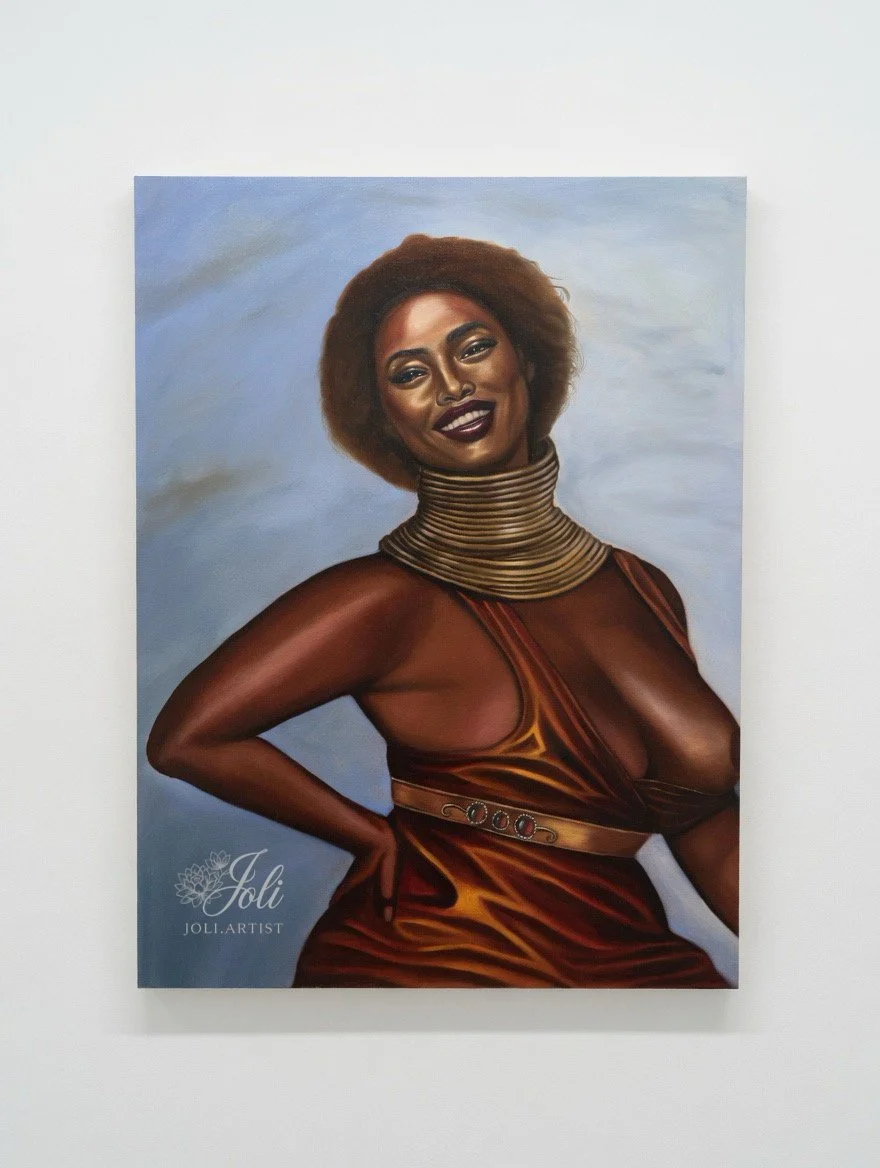
Joy, by Jo Li. Hand-painted original oil on aluminium, 48 × 36 inches.
The paint and the support
In an oil painting, pigments are held in a drying oil. The support is the material carrying the painted layers. Canvas, wooden panels and metal have all served this purpose. The National Gallery’s glossary of painting supports explains the distinction.
In “oil on aluminium,” oil identifies the paint medium and aluminium identifies the support. In American spelling, the same metal is called aluminum. The work can be a hand-painted original on either canvas or metal; the medium and support describe its materials.
Look beyond a metallic appearance
An aluminium support may carry preparatory layers beneath the paint. GOLDEN Artist Colors describes aluminium composite panels as a construction with aluminium sheets and a core, and explains how grounds can alter the painting surface. Its materials guidance concerns that particular type of panel. The exact construction and preparation of an individual work are details to confirm with its artist.
When looking at a photograph, notice the painted highlights, the surface texture and the light falling across the work. A bright passage in a face or dress does not, by itself, tell you which support lies underneath. A closer photograph can help you see the paint; a view of the edges or reverse can help you understand the object.
Begin with a particular painting
In Joy, a broad smile, a tilted head and a hand at the waist give the figure an assured presence. Warm highlights move across the skin and copper-coloured dress, while stacked gold-coloured neck rings draw the eye towards the face. The original is listed as oil on aluminium, measuring 48 × 36 inches.
The Self Possessed is listed as oil on aluminium panel, measuring 24 × 36 inches. Venus’ Gaze is an oil on aluminium of the same listed dimensions. Their individual pages bring together the photographs, price and enquiry link for each work.
The women in these paintings inhabit Jo Li’s alternate world. Their expressions and bearing lead the encounter. The listed materials and dimensions give that encounter a physical scale and surface, something to consider alongside the image.
Ask about the whole object
The Canadian Conservation Institute explains that a painting’s materials work together as a structure, influencing its handling, display and framing. A support is one part of that structure. Its guide to painting materials offers a fuller account.
Before choosing a work, ask about its current condition, whether the stated dimensions include a frame, and the framing or hanging arrangements that come with it. Close photographs of the surface and edges are useful, as is a clear account of packing and delivery to your location.
For a particular original, enquire with the painting’s title and your location. For a broader look at presence, scale and photographs, read Choosing an Original Oil Painting: Presence, Scale and Detail.